“Art enables you to express when you are unable to muster the words to do so.”
Neil Winter
This week, repsychl interviews Art Psychotherapist, Ali Coles, and her client (art therapee), Neil Winter, a writer and barrister who has symptoms of complex post-traumatic stress disorder (C-PTSD).
In Neil’s words, “I’d spent most of my life, all of my youth and a great deal of my adult life, in institutions and so came to the art therapy space institutionalised with expectations and opinions about what to expect from an edifice such as the NHS and not all of the expectations on the side of positivity.”
Based on their work together that followed across an 18-month period, Ali and Neil published an article entitled ‘The silent intermediary’: a co-authored exploration of a client’s experience of art psychotherapy for C-PTSD’ in the International Journal of Art Therapy.
In this deeply poignant paper, Neil describes how art therapy with Ali helped him regain a sense of control, express himself without words, distance from trauma, and tap into creativity and play. Together, they identified several aspects of that experience that seem to have been widely overlooked in research, including how art-making can alleviate the fear of revealing past abuse and enable people to embrace positive aspects of the child self.
It was their dynamic therapeutic relationship that allowed for greater freedom of creative expression and a deeper sense of trust, as Neil and Ali elaborate in our interview.
‘Expressing without words’ is a central theme in this paper; you highlight it as being key to the process of art therapy and art in general. In your experience, what can art express that words alone cannot?
Neil: It’s not that art can express things that words cannot, it’s that art enables you to express when you are unable to muster the words to do so. Or that your experience and/or condition prohibits you from verbally expressing your experience. There’s that wonderful quote: ‘If I could say it in words there would be no reason to paint’.
Often, people with my own condition are muted and impaired from ever communicating the very thing they’re screaming out to disgorge – to exorcise – because of the psychological fetters that those who inflicted the trauma imposed on their victims. It’s not that you are trying to verbally express your experience and that art takes over and augments that, it’s that verbal expression is not open to you, without the most severe psychological consequences, and that art is the only way you can do it.
People who have experienced trauma, particularly sexual and/or mental abuse, are left with a condition best described, to coin a term, as loquiphobia – an overpowering, debilitating fear of speaking. The beauty of art is not that it transcends words, but negates the very need for them, and circumvents loquiphobia.
Ali: Art-making in art psychotherapy can certainly express things which may not be in conscious awareness, or experiences for which there are no words, such as very early childhood trauma. But Neil highlights another crucial role for art, which is circumventing the order ‘not to speak’ which has been imposed by those who inflicted the trauma.
The internalised fear of the consequences of speaking out acts as a kind of psychological ‘gag’, but art can enable the expression of what needs to be communicated – as Neil says in the paper, ‘I was told, “You must never speak”, I was never told, “You must never draw”.
You write that ‘Ali’s acceptance of [Neil’s] ‘initial infantile sketches’ helped trust to form within the therapeutic relationship and the trust was ‘reaffirmed’ periodically through this cyclical process of shifting the focus of the art-making.’ Could you say more about how this trust was formed and reaffirmed within the relationship? What was it like to experience this developing trust between you?
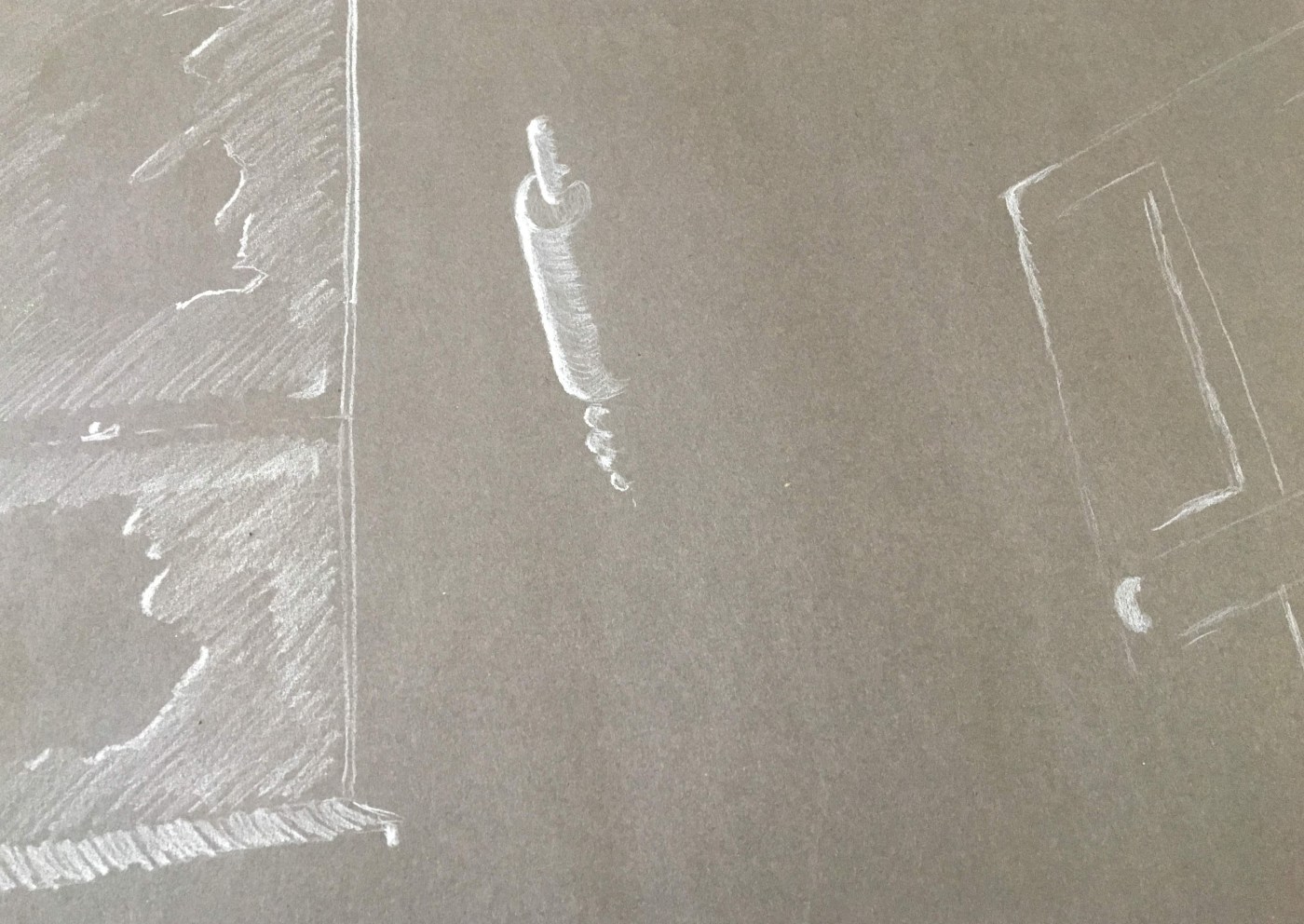
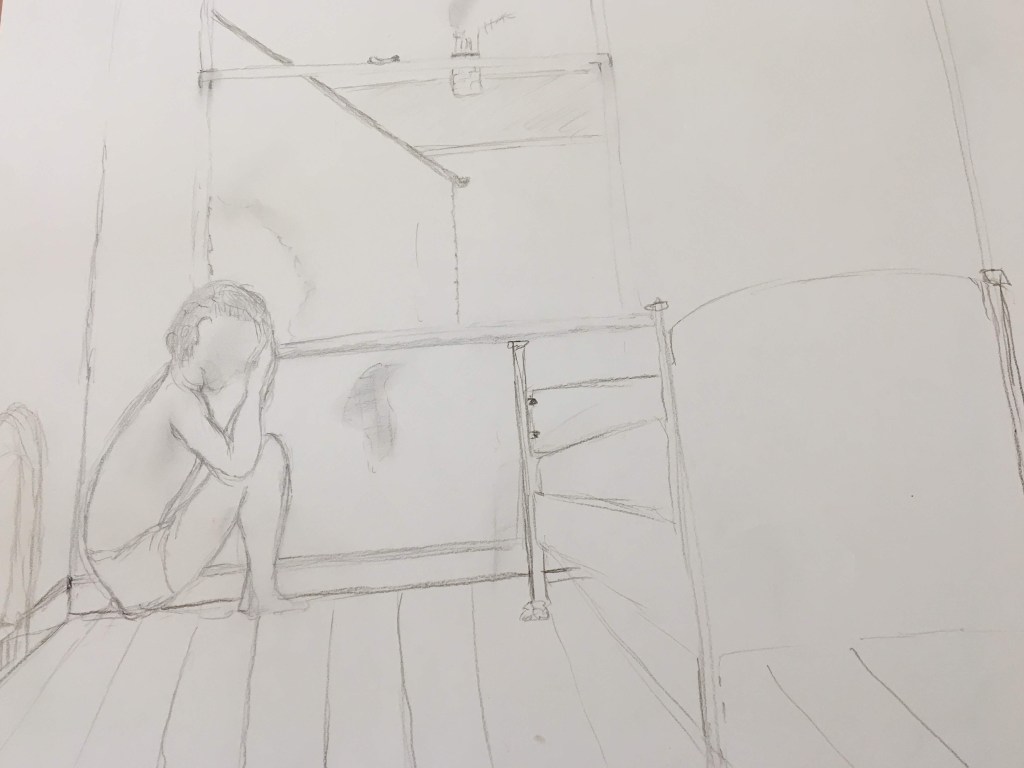
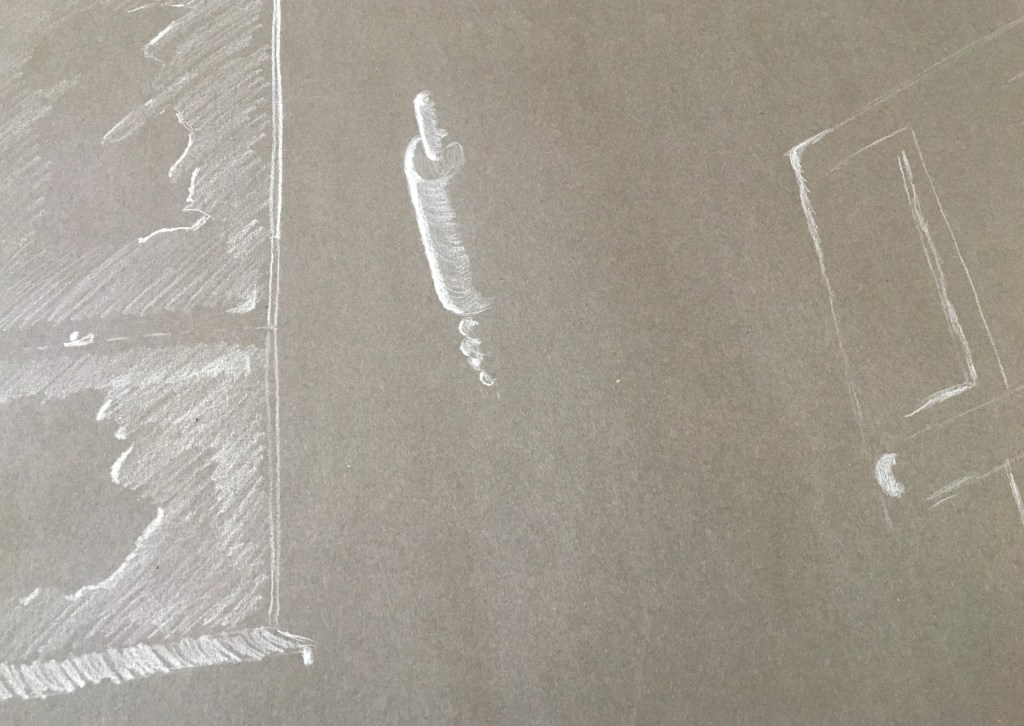
Neil: The image that comes to mind is of a child learning to speak, in that I had never expressed my experiences of trauma through any medium, verbal, artistic or otherwise, and given that the verbal route was closed off from me, here I was offered a whole new artistic vocabulary. Hence, just as a child stammering over its first words, grasping only monosyllabic expressions, so too my first efforts at communicating through art were very basic – artistically monosyllabic.
Just as with a child, one coaxes and coaches them on to more varied and colourful expression, and introduces them to a greater dictionary of words, so too through the art therapy experience one is never criticised but encouraged and given the space to express more and more and the tools with which to do so. I think if you plotted my drawings on a timeline, this process is quite clearly evidenced. It’s important along that journey that no judgement is expressed.
In relation to trust, clearly one needs encouragement, not discouragement, but it’s a lot more complex than that, because the things you’re expressing are immeasurably sensitive and are but a thin veil away from one’s greatest fears. So, I think that’s why the journey of expression is very much like a child speaking for the first time into a space that encourages, elicits and to some degree supports growing a greater expression – a space that I think is the most challenging thing to hold.
Ali: Neil’s reflections on how the art-making facilitated trust were really interesting to me. I hadn’t quite realised the extent to which a non-judgemental, non-rejecting, ‘no right or wrong’ response to whatever Neil created contributed to developing the trusting therapeutic relationship. As Neil says, the growing sense of trust was mirrored in his artwork, which became more fluent and expressive, and Neil was eventually able to use the art-making to communicate and process some profoundly traumatising experiences.
It’s written from Neil’s perspective that Ali did not work in a ‘pre-contrived’, ‘pre-established way’. Neil, how did you come to realise this about Ali’s way of being with you? And Ali, how important is this for you, and what makes it possible for you to work in this way?
Neil: I didn’t meet Ali in a vacuum. I’d spent most of my life, all of my youth and a great deal of my adult life, in institutions and so came to the art therapy space institutionalised with expectations and opinions about what to expect from an edifice such as the NHS and not all of the expectations on the side of positivity.
So, when I walked into the art therapy session I expected someone to be telling me what was or wasn’t wrong with me, what I should or shouldn’t do about it and how they were going to go about treating me – all before I’d said hello. It was the complete absence of all of that that initially stunned me and then two or three sessions afterwards led me on a quest to almost try and find it. It was the free-ness, the lack of edges and lack of rules that dumbfounded me. I found myself in an undiscovered country, so I was looking for those rules and institutional attitudes to affirm my a priori expectations and my ready disappointment.
It very quickly became clear to me that for the first time I wasn’t looking across the desk for healing, but that the person sat across the desk was looking for it from me, which was a real role reversal. The whole feel of the sessions was empowering because it was so fluid and unpremeditated and was often elating because of the realisation that whatever progress had been made was being made on an equal footing.
Ali: I really like the term ‘therapee’ which Neil uses to describe his role in the therapy, rather than ‘client’ or ‘service user’ or ‘patient’, as this suggests that the therapy was collaborative, with each of us contributing to how we were working together. We talk about the triangular relationship in art psychotherapy – the therapist, the therapee and the artwork.
The art-making in itself encourages the therapee to be actively involved in the therapeutic process, and reflections on the artistic process and product are a joint undertaking by therapist and therapee together. So, my approach as a therapist is very much ‘alongside’ rather than ‘opposite’, and it is led by the therapee’s creative expressions. A key part of my role is to create a safe and facilitating psychological environment to enable people to express and explore thoughts, feelings and experiences, rather than imposing a predetermined structure.
Were there any other aspects of this therapeutic experience that may not have been relevant for the purposes of the paper, but you would like to share now?
Neil: Something I have been left with is the perception that art therapy is not taken seriously by psychiatrists and other mental health professionals, or to the degree commensurate with the seismic impact it had on me. In fact, my only experience is that many psychiatrists and psychotherapists see it as a rehabilitative pastime which those who have failed to respond to the traditional treatments are sent to participate in. The converse could not be more true – that art therapy should be the point of the spear and not the butt end of the handle!
Ali: A huge ‘take home’ message for me is just how much I have learned about my therapeutic practice through exploring Neil’s experience of art psychotherapy with him. Neil spontaneously offered his thoughts about the therapeutic process during therapy, and it was invaluable to then have the opportunity to look back some months later and think together in depth about what went on. I feel that I have much to learn from all those I work with in therapy, and the experience of writing the paper with Neil has strengthened my commitment to be open with therapees about my therapeutic approaches and to encourage them to reflect on, and question, the therapeutic process.
Neil, having had this healing experience with art, are there any other forms of art, creativity, or expression you would like to introduce into your life?
Neil: I don’t think that one engages in art therapy and then consciously sets about introducing other forms of art into one’s life – I think it’s more of a case that after engaging in art therapy the proverbial light is switched on and one is more readily open and cognisant of and excited by all of the forms of art.
In my own personal experience, since engaging in art therapy, I readily engage with my children in creating art, I’ve taken up music, especially vocals, and perform publicly, and have rekindled my love of writing. When you go through art therapy experience and see the richness of depth that art itself can convey, it leads you to want to create that same depth of expression in one’s writing, so that each paragraph to me now is like a strained piece of art, where I’m trying to elicit or extract every minuscule particle of meaning from each consonant, each vowel, each word and each sentence. It’s like I’m tearing at words to make them just like paint.
Ali, what are the greatest lessons you have learned so far as an Art Psychotherapist?
Ali: That’s a difficult question! I’m learning all the time, from every therapeutic encounter, and that’s one of the things I really value about my work. But I always come back to the way in which art, both in terms of the creative process and the completed artwork, can express and ‘hold’ profound psychological material, so that it can be explored and transformed.
Also, the way in which the centrality of art-making makes art psychotherapy an innately responsive approach is key for me – Neil and I have recently written a book chapter about innovation in art psychotherapy (in Art Psychotherapy and Innovation: New Territories, Techniques and Technologies), which talks (amongst other things) about how the art in art psychotherapy encourages ‘innovation in the moment’ in the therapy.
Finally – I want to say how grateful I am to Neil for giving his time and energy to help me to develop as a therapist, and to inform the profession more widely.
Art Psychotherapy and Innovation: New Territories, Techniques and Technologies is a newly released book with Ali Coles as editor and with contributions by Neil Winter. It examines how to adapt to an increase in demand for therapeutic interventions as the sector continues to emphasise psychological health, wellbeing, and social engagement. Using the intensive clinical training of art psychotherapists, this includes collaborative practices with other arts and health practitioners to ensure safe, ethical therapeutic boundaries.
Using theoretical discussion to connect art psychotherapy with broader contexts, this collection presents case studies of innovative methods in relation to new territories (client groups and locations), novel techniques in approaches to practice, and engagement with technologies and cross-disciplinary collaborations.
Order your copy: Art Psychotherapy and Innovation: New Territories, Techniques and Technologies


